
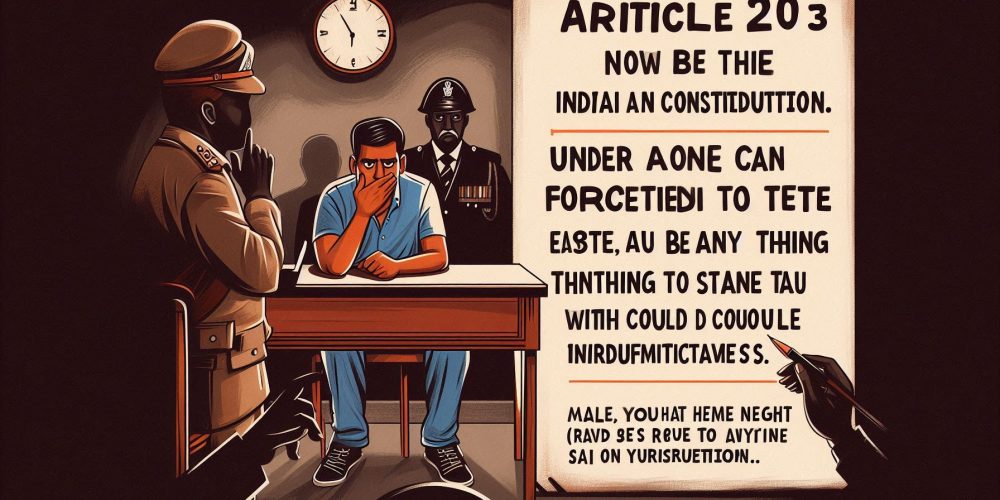
In many movies and TV shows, you’ve probably heard the phrase “You have the right to remain silent.” This is known as the Right to Silence, and it’s a fundamental right in India, too, under Article 20(3) of the Constitution.
What is the Right to Silence?
Under Article 20(3) of the Indian Constitution, no one can be forced to say anything that could incriminate themselves. In simpler terms, you have the right to remain silent during police interrogation or questioning.
This is similar to the Miranda rights in the United States, which also gives individuals the right not to self-incriminate.
When Does This Right Apply?
You can exercise your right to silence if:
You are arrested or detained by the police.
You are being questioned by the police in connection with a criminal case.
The police cannot force you to say anything that would prove you guilty of a crime.
👉 “The police cannot force you to speak against yourself.”
Why Is This Important?
The Right to Silence helps protect people from being pressured or coerced into confessing to a crime they did not commit. This ensures that confessions are voluntary, and not made under threat or duress.
What Should You Do If Arrested?
If you are arrested or detained by the police:
You can stay silent and not answer any questions.
You can ask for a lawyer to be present during questioning.
The police must inform you that you have the right to remain silent.
👉 “Don’t feel pressured. You don’t have to answer police questions without a lawyer.”
Real-Life Example: Ravi’s Right to Silence
Ravi was arrested for a crime he didn’t commit.
When the police started questioning him, Ravi remembered his right to remain silent.
He chose not to answer and requested a lawyer.
Later, his lawyer proved his innocence, and Ravi was released.
This story shows how knowing your rights can help protect you from false accusations.
What Happens If You Stay Silent?
Nothing bad will happen if you choose to stay silent.
Your silence cannot be used against you in court.
If the police pressure you, stay firm and remain calm. Your lawyer will help you navigate the situation.
Key Takeaways
“You have the right to remain silent. Don’t say anything that could hurt your case.”
“The police cannot force you to confess or speak against yourself.”
“Always ask for a lawyer if you are arrested or detained.”
Final Thoughts
“Your right to silence is your protection against self-incrimination.”
In any situation where you’re questioned or detained, remember you don’t have to speak. It’s your right to remain silent under Article 20(3).