
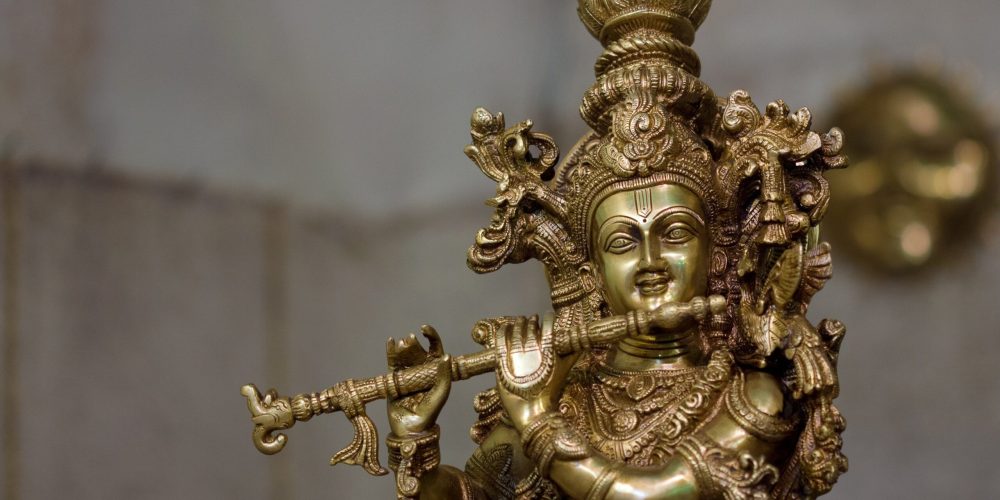
When we hear about Krishna’s childhood, most of us think of the Bhagavatam—the playful butter thief, the killer of Kamsa, the flute player of Vrindavan.
But did you know that the earliest stories of Krishna’s childhood come from a different text?
It’s called the Harivamsa, a lesser-known Sanskrit epic that adds magic, history, and divine mysteries to the Mahabharata.
Here’s what every Indian should know about the Harivamsa and the early Krishna 👇
📖 What Is Harivamsa?
Harivamsa literally means “The Lineage of Hari (Vishnu)”.
It is considered the 19th book of the Mahabharata.
It has 3 sections:
Harivamsa Parva – Creation and lineage of the Yadus.
Vishnu Parva – The stories of Krishna’s life (focus here!).
Bhavishya Parva – Prophecies and future cosmic events.
📌 Krishna’s full divine identity is hinted here—before Bhagavatam made it devotional.
👶 Krishna’s Early Life – As Told in Harivamsa (Rare Stories)
1. Krishna’s Birth Was Cosmic, Not Just Divine
Unlike Bhagavatam, which shows Krishna as Vishnu’s avatar, Harivamsa shows cosmic events shaking the earth during his birth.
The sky rained flowers. The rivers calmed. Even celestial beings paused to watch.
🧬 The energy of Krishna was so powerful—it rewrote time and space itself.
2. Krishna Was a Mischief Maker Since Day 1
Forget just stealing butter—Harivamsa says:
He tied cows’ tails together just for fun.
He rode on calves like horses.
He once climbed a bull and declared himself king of Gokul!
😂 The villagers didn’t know whether to scold him or laugh.
3. He Spoke Clearly at 3 Months Old
Yashoda thought Krishna was crying—but suddenly he spoke Sanskrit verses with clarity and intelligence.
He revealed his divinity to her—and then smiled like a baby again.
🕊️ Even the gods couldn’t understand Krishna’s leela.
4. The Real Fight with Putana
In Harivamsa, Putana is described not just as a demoness but as a sorceress who changes shapes.
She came disguised as a golden beauty, enchanting everyone.
When she breastfed Krishna, he sucked out her soul, not just her milk.
🔥 Putana begged for moksha—and Krishna gave it.
5. Krishna’s Baby Gang Had Names and Personalities
It wasn’t just “other boys.” The Harivamsa describes:
Shankhak – The thinker, always questioning Krishna’s plans.
Vrisha – The strong boy, always ready to wrestle.
Arjuna (cowherd, not Pandava) – Naughty, sharp-tongued, Krishna’s best prank partner.
🎭 They were a childhood team that created chaos and joy in Gokul.
6. Why Nanda Was More Than a Foster Father
Harivamsa gives deep respect to Nanda.
He is portrayed as a noble Yadava chief, not just a cowherd.
He knew Krishna was divine but chose to raise him with love, not fear.
🧡 True parenting isn’t about control—it’s about surrendering to love.
7. Radha Is Not Mentioned. But…
Yes, in the Harivamsa, Radha doesn’t appear by name.
But there are hints of Krishna’s special connection with a gopi who had unmatched love for him.
🕊️ This leaves room for the later Bhakti poets to shape her story beautifully.
🐍 Expanded Details of Krishna vs Kaliya
In Harivamsa:
Kaliya had wives who begged Krishna for mercy.
After Krishna defeated the serpent, he forgave him and asked him to leave Yamuna peacefully.
Krishna then danced on his head like a cosmic performance.
🌊 It was not just victory—it was a transformation.
🌸 Devotion, But with Strategy
Harivamsa Krishna is not just playful—he is clever, strategic, and political.
He avoids conflict when possible.
He respects elders—even those who oppose him.
He plans peace and war like a mature king even as a child.
🧠 This Krishna is both a god and a master of dharma.
✨ Why Harivamsa Matters Today
It shows Krishna as a human-like god—relatable, smart, emotional.
It connects Krishna’s early life to India’s political history (Yadava lineage, Kamsa’s rule).
It shows that divine power doesn’t always roar—sometimes, it plays flute.
🪔 Before you worship Krishna as a god, fall in love with him as a child.
🔔 Closing Quote
“The world saw a blue boy with a flute. The wise saw the infinite dancing in the mud.”
Let’s keep these stories alive—not just in temples, but in our hearts and homes.