
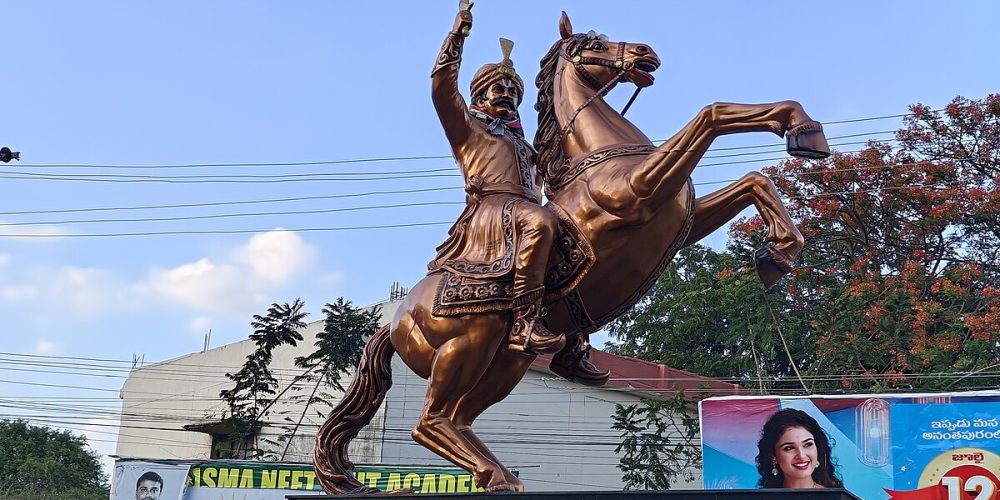
Uyyalawada Narasimha Reddy, a brave freedom fighter, is one of the most legendary figures in the history of Andhra Pradesh. He led an armed rebellion against the British East India Company in 1846. His story is one of sacrifice, valor, and resistance against the British colonial empire, but his legacy has not been as widely recognized as it should be.
Who Was Uyyalawada Narasimha Reddy?
Born into a farming family in the early 19th century in the Rayalaseema region of Andhra Pradesh, Narasimha Reddy was a sardar (chief) of a village. His rebellion against the British was driven by the increasing exploitation of farmers and the unjust land policies imposed by the British East India Company.
The 1846 Rebellion
In 1846, Narasimha Reddy led a revolt in the Rayalaseema region against the British rulers. His primary goal was to protect the local farmers and their land from the oppressive taxes and rules that the British imposed. The local zamindars (landowners) were working in collaboration with the British, exploiting the farmers.
The rebellion that Narasimha Reddy led wasn’t a small one. It was a full-scale armed insurrection against the British, who had already established their dominance in India. He led a group of fighters from various backgrounds, including farmers and local militia, and attacked British officials and army camps.
The British Response
Narasimha Reddy’s rebellion spread quickly, and the British authorities were unable to contain it initially. They responded brutally. In a bid to crush the rebellion, the British sent large numbers of troops to suppress the freedom fighters.
Eventually, Narasimha Reddy was captured. He was tried for his rebellion and hanged in 1847 in a public execution. His death was a brutal act by the British, as they wanted to set an example to deter other freedom movements. Narasimha Reddy’s hanging was a tragic end, but it also became a symbol of resistance.
Why Is He Important?
Narasimha Reddy’s rebellion in 1846 was one of the earliest resistance movements against the British in India. His efforts were precursors to the larger freedom struggle that would take shape in the years that followed. Despite being forgotten for a long time, his story is one of the first Indian rebellions against British rule and is an important part of our freedom struggle.
He fought for the rights of the oppressed, especially the farmers who were suffering due to British policies. His bravery, leadership, and refusal to bow to colonial rule continue to inspire generations of Indians.
Real-Life Example: The Spirit of Resistance
In 1846, when the British were cracking down on local revolts, Narasimha Reddy stood tall as a symbol of resistance. He led from the front, gathering people from villages to fight against the unfair land taxes that crippled the farmers.
Though the rebellion was crushed, it planted the seed for future uprisings like the Indian Rebellion of 1857. Narasimha Reddy’s story shows that even in the face of defeat, the courage to fight against injustice can never be erased.
Key Takeaways
“Narasimha Reddy was one of the earliest rebels who fought against British oppression.”
“He led an armed rebellion in 1846 to protect the rights of farmers and the local community.”
“Though hanged by the British, his bravery lives on as a symbol of resistance.”
“His rebellion inspired later movements that contributed to India’s independence.”
Final Thoughts
“Uyyalawada Narasimha Reddy’s sacrifice represents the courage and spirit of resistance against British rule.”
Though the British hanged him brutally, his fight for justice and freedom is an inspiration for all Indians. His legacy should be celebrated, as it played a vital role in the broader struggle for India’s independence.